Abstract
This paper proposes a novel definition of super-resolution for PDE-based problems. Conventional super-resolution approaches typically downsample high-resolution data to create low-resolution inputs, which inherently retains too much of the underlying physics. Instead, this work redefines the problem by using actual coarse-grid simulated data as input and predicting fine-grid outcomes directly.
We introduce PIUNet (Physics-Informed UNet), a framework that combines data-driven loss with physics-informed loss incorporating convective and diffusive terms from the governing partial differential equations. This dual-loss strategy ensures that the model not only learns from the data but also respects the fundamental physics governing the fluid flow phenomena.
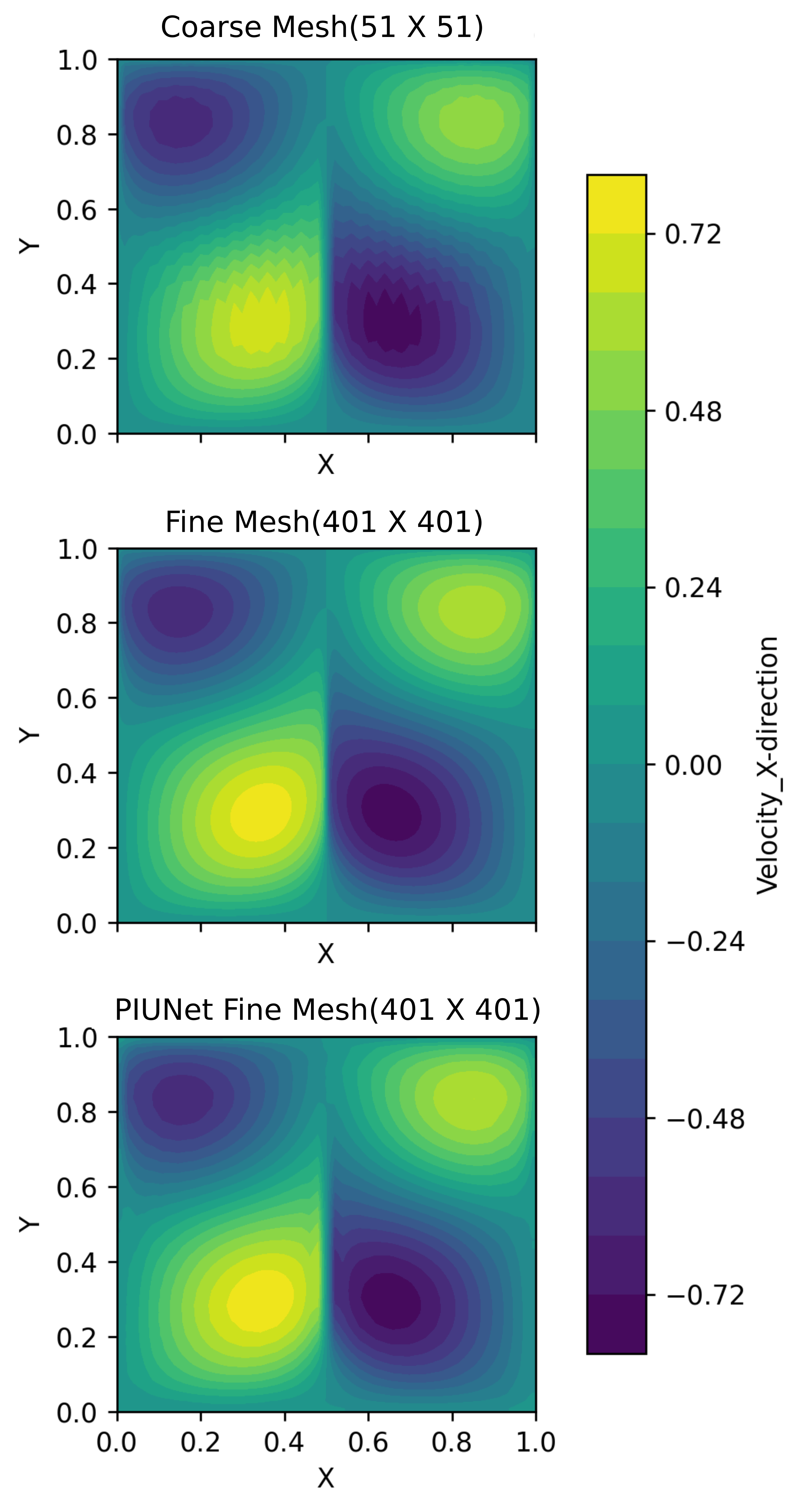
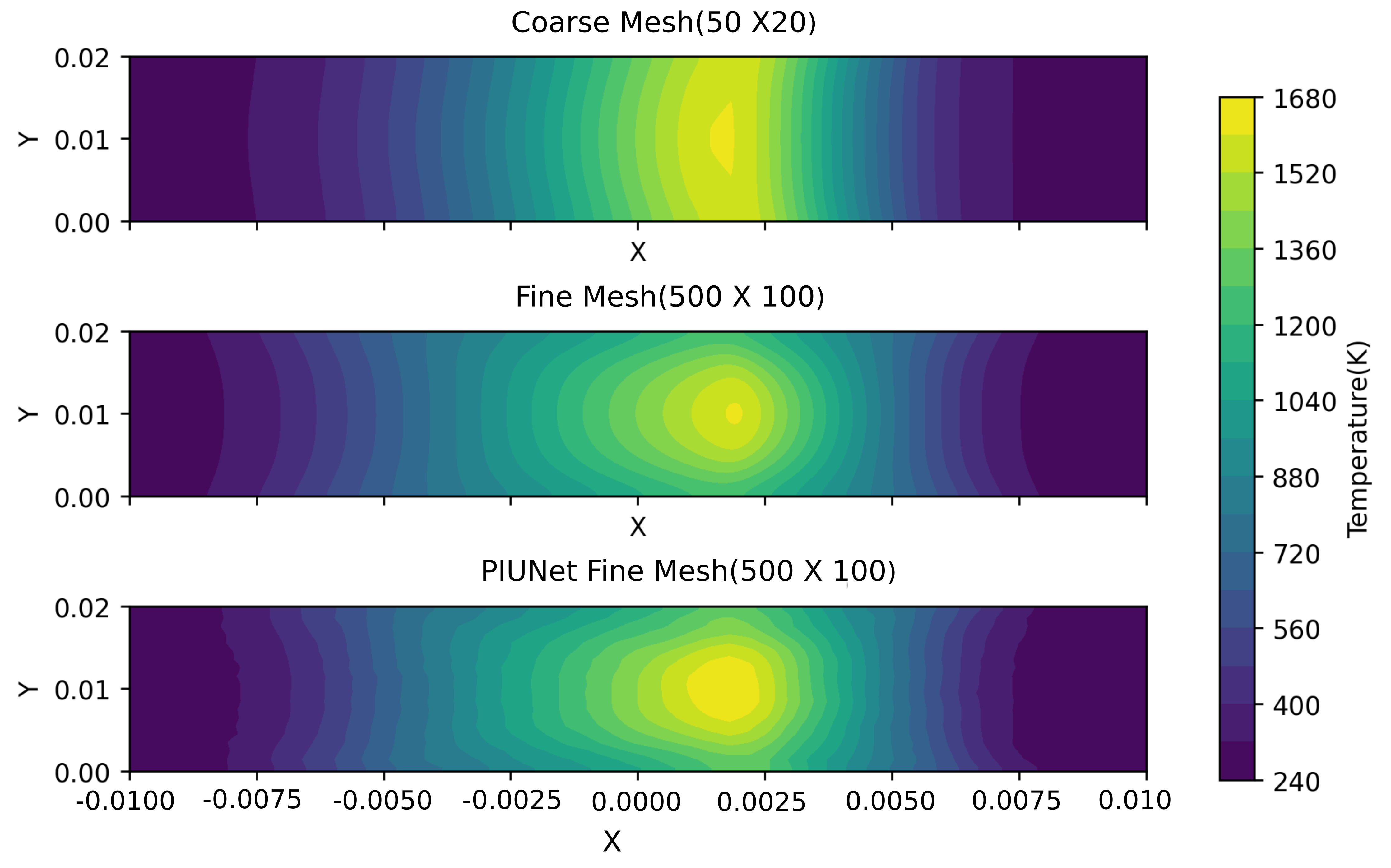
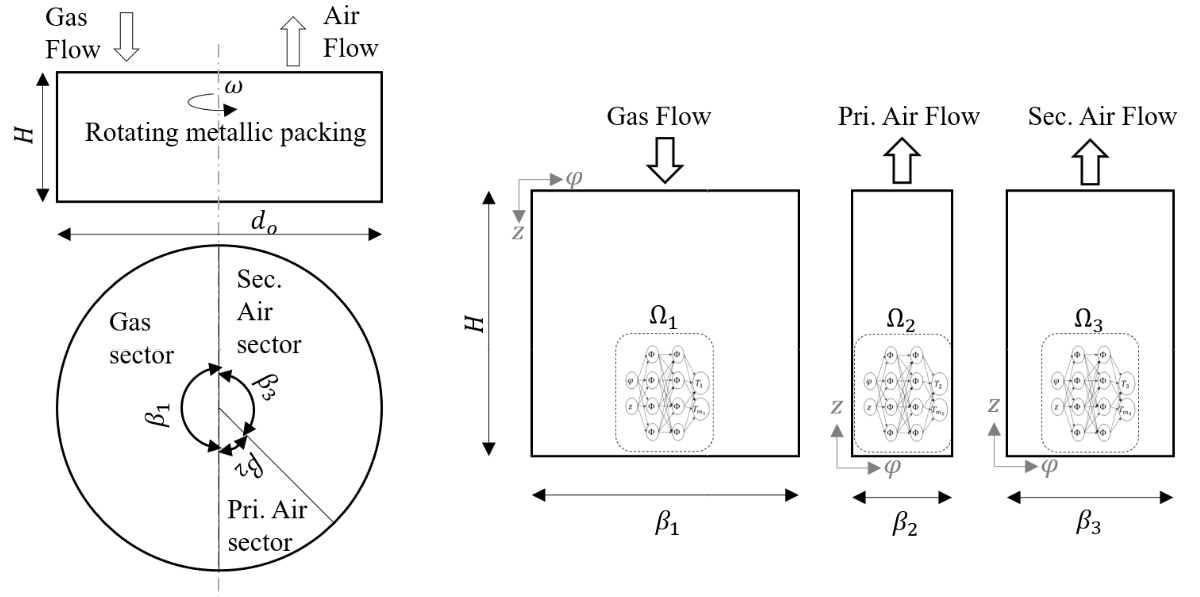
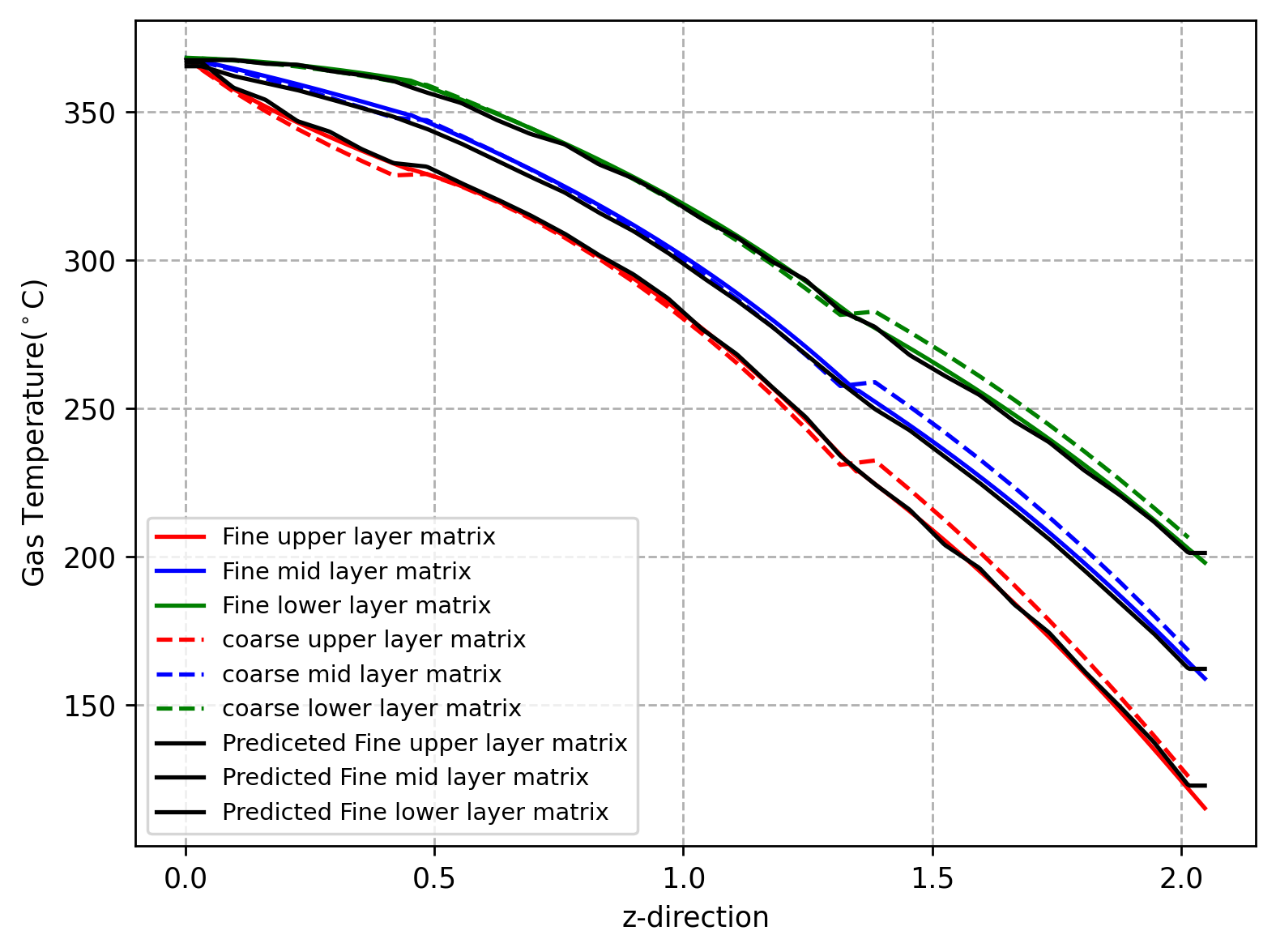
The approach is demonstrated on three challenging problems: the 2D Burger's equation, methane combustion, and industrial heat exchangers, achieving up to 235X speedup over traditional fine-mesh CFD simulations while maintaining high prediction accuracy.
Key Highlights
Architecture
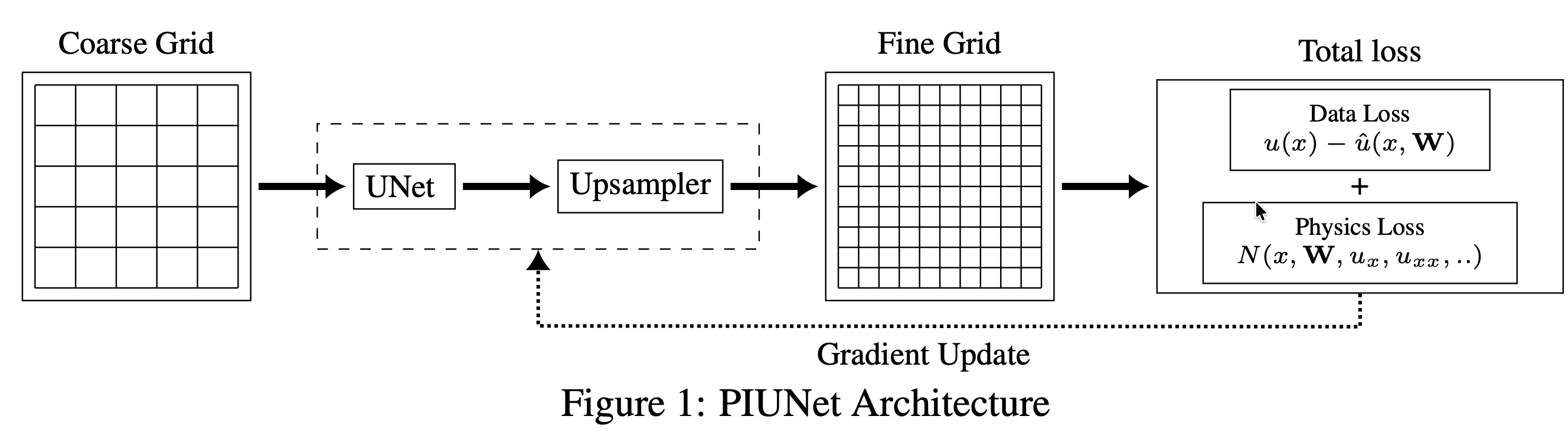
PIUNet builds on the UNet encoder-decoder architecture and augments it with a physics-informed loss function. The model takes coarse-grid simulation data as input and predicts the corresponding fine-grid results. The training objective combines a standard data loss with a physics loss derived from the convective and diffusive terms of the governing PDEs, ensuring physically consistent predictions.
Key Contributions
- Novel SR Definition: Redefines super-resolution using actual coarse-grid simulated data instead of downsampled fine-grid data, providing a more realistic and challenging problem formulation.
- Physics-Informed Loss: Incorporates convective and diffusive terms from governing PDEs as physics loss, ensuring predictions respect the underlying physical laws.
- Industrial Applications: Validated on 2D Burger's equation, methane combustion, and industrial air preheaters, demonstrating broad applicability.
- 235X Acceleration: Substantial speedup over traditional fine-mesh CFD simulations, enabling rapid high-fidelity predictions.
Results
PIUNet demonstrates strong performance across all three test cases, producing fine-mesh predictions that closely match the ground truth while achieving significant computational speedups over traditional CFD simulations.